

Last updated: October 2026
The ultimate by-the-glass experience is coming to Spain, with TEMPOS Vega Sicilia and Coravin. This autumn, 20 venues from The Coravin Guide, from Madrid to Marbella and Palma to Bilbao, will pour a special by-the-glass menu of wines from TEMPOS Vega Sicilia, including Único, Valbuena 5º and Alión. These are wines usually kept for special occasions and sold only by the bottle. Now, thanks to Coravin, wine lovers can enjoy them one glass at a time.
Vega Sicilia has always been a wine of occasions. Único waits ten years in the cellar before it is released, then waits again on the last page of the list for the evening that justifies it. Few wines in Spain are held in greater reverence, and few are tasted by fewer people.
Coravin exists to change that.
The Coravin wine by-the-glass system draws a measure through the cork without ever pulling it, and the rest of the bottle stays exactly as it was, so a glass of Único on a Tuesday costs a venue nothing in lost wine or wastage. The Coravin Guide was founded on the same conviction: that every wine, everywhere, should be available by the glass. TEMPOS Vega Sicilia by-the-Glass is that conviction applied to the estate that most rewards it. Across November, 20 venues in The Coravin Guide across Spain, seven in Madrid, eight in Marbella and the remainder in Barcelona, Palma, Seville and Bilbao, are pouring a selection of wines from Spain's most iconic estate, including the likes of Único, Valbuena 5º and Alión by-the-glass.
A Giant of Spanish Winemaking
Vega Sicilia sits on the north bank of the River Duero near Valbuena de Duero, in the Alfoz de Peñafiel, an hour's drive east of Valladolid. Eloy Lecanda y Chaves founded it in 1864 after a spell in Bordeaux, and he came home with cuttings of Cabernet Sauvignon and Merlot that were planted alongside the local Tinto Fino, the Ribera del Duero name for Tempranillo. Some of those French varieties are still in the blend. The "Sicilia" has nothing to do with the island; it refers to Saint Cecilia.
For most of the twentieth century the estate changed hands between industrialists and investors, and its reputation grew quietly, bottle by allocated bottle. The Álvarez family bought it in 1982, the same year Ribera del Duero was granted its Denominación de Origen, and they have owned it since. Hugh Johnson once called it the Latour of Spain, with a warmer climate. The comparison has stuck because the estate behaves like a Bordeaux first growth: it declares vintages, it declines to make Único in poor years, and it releases its wines on its own clock. In 1991 it released the 1968 and the 1982 in the same year, one after 23 years in the cellar and the other after nine.
The vineyard runs to roughly a hundred hectares, with some vines over a century old, and the wines are made by a small team under technical director Gonzalo Iturriaga, who has held the role for over a decade.
"You don't need any artifice – the terroir gives us everything."
Gonzalo Iturriaga, technical director, speaking to Wine Anorak, July 2026
Ribera del Duero, and Why the Altitude Matters
Ribera del Duero is high country. The valley floor sits between 750 and 850 metres above sea level and the hills climb past 1,000, which makes it one of the highest serious red-wine regions in Europe. The climate is continental in the harshest sense: summers above 40°C, long cold winters, under 400 millimetres of rain a year, and a swing of up to 25°C between afternoon and night during the ripening season. Those cold nights are the point. They hold acidity and colour in Tinto Fino while the days build sugar and tannin, and they are why a Ribera red can carry 14 per cent alcohol and still taste fresh.
The appellation requires its reds to be at least 75 per cent Tempranillo, and Vega Sicilia runs well above that. The 2016 Único is 96 per cent Tinto Fino and four per cent Cabernet Sauvignon, a far smaller French share than the estate used a generation ago. The Merlot, all of it, goes into Valbuena 5º.
The Wines, from Alión to Único
The estate is really a group, TEMPOS Vega Sicilia, and the November pours draw on the Ribera wines at its core. Único is the flagship. It ferments in oak vats and spends around five and a half years in wood, the first 18 months in small French and American barrels, the rest in 22,000-litre casks, before bottle ageing takes it to a minimum of ten years from the vintage. Nobody else in Spain ages a red that long as a matter of routine. Valbuena 5º is the same vineyard released after five years, with more Merlot and a more approachable frame; Alión, founded next door in 1991, is the modern face of the house, Tinto Fino raised in concrete, large foudres and new French oak.
Above all of them sits Único Reserva Especial, a blend of three Único vintages rather than one. The 2026 release marries 2011, 2012 and 2014, and it is the most expensive wine in the range.
| Wine | Region | Current release |
|---|---|---|
| Único Reserva Especial | Ribera del Duero | 2026 release (2011, 2012, 2014) |
| Único | Ribera del Duero | 2016 |
| Valbuena 5º | Ribera del Duero | 2021 |
| Alión | Ribera del Duero | 2022 |
| Pintia | Toro | 2021 |
| Macán | Rioja | 2021 |
| Macán Clásico | Rioja | 2022 |
Current releases as reported by Spanish Wine Lover, January 2026. By-the-glass availability and prices are set by each venue.
Beyond Ribera, the family's Pintia makes Tinta de Toro in the hotter, lower Toro appellation; Macán is the Rioja estate run with the Rothschild family; Oremus makes Tokaji in Hungary. The newest project is an Albariño from Crecente in Rías Baixas, called Deiva, built around a €20 million winery whose first wines are not due until 2027. A house that waits ten years for its flagship was never going to rush a white.
Why a Glass Changes Everything

Price is only part of why Único is hard to taste. The other part is that it is a wine built to be opened late. Most bottles disappear into private cellars on release. In 2022 a vertical of 36 Único vintages sold at auction in Switzerland for €111,477, showcasing the rarity and appeal of this legendary wine.
Pouring it by-the-glass gives curious wine lovers an unprecedented opportunity.
The 20 Venues Pouring Vega Sicilia This November
Every venue below is a Coravin Guide listing, and each is pouring TEMPOS Vega Sicilia wines by-the-glass for the month. Seven are in Madrid and eight in Marbella, with the rest in Barcelona, Palma, Seville and Bilbao. Which wines, and at what price, is set by each venue and changes as bottles run out, so it is worth calling ahead for a specific pour.
Madrid
7 venues pouring Vega Sicilia by the glass

01. Spa de Langostas
Centro · Madrid
A subterranean dining room styled as a sea cave beneath the Metrópolis building on Alcalá, with a DJ and a supper-club mood after dark. The kitchen is built around a single ingredient, lobster, and the list leans on Champagne and Rioja to go with it.
View on the Coravin Guide
02. La Tasca Fina
Centro · Madrid
Marta Seco and Sandro Silva’s modern reading of the classic Madrid tasca, also inside Club Metrópolis, with a circular bar, a jamón station and linen on the tables. Gildas and robata-grilled tuna set the tone, and the by-the-glass list is unusually strong on Port, rosé and sweet wines alongside the Spanish staples.
View on the Coravin Guide
03. Arzábal Retiro
Retiro · Madrid
The original Arzábal, a tavern opposite El Retiro park that has fed Madrid without ceremony for more than 15 years. The room is informal and the wine list is not, with Ribera del Duero and Champagne leading a generous by-the-glass selection.
View on the Coravin Guide
04. Ten con ten
Salamanca · Madrid
The flagship of the Seco and Silva group in Salamanca, a cosmopolitan room with a cocktail bar, a library corner and a bistro that fills with people who want to see and be seen. Its by-the-glass list is among the longest in Madrid, with a separate page of rare and high-end bottles.
View on the Coravin Guide
05. El Paraguas
Salamanca · Madrid
The first restaurant of the Paraguas group and still a Madrid institution, a classical, formal dining room on Jorge Juan where business has been done over lunch for more than 20 years. The cellar is one of the deepest in the city, running from Burgundy and Bordeaux to Barolo and Ribera del Duero, and a great deal of it is poured by the glass.
View on the Coravin Guide
06. Quintín Ultramarinos
Salamanca · Madrid
An all-day corner of Salamanca that runs from breakfast to late dinner with the feel of an old grocer’s shop, and a neighbourhood crowd on first-name terms with the staff. The list mixes traditional Spanish bottles with cult producers, and the glass pours reach into Burgundy, Bordeaux and sherry.
View on the Coravin Guide
07. The Library Wine Boutique & Cuisine
Salamanca · Madrid
Three things under one roof on Serrano: a restaurant and wine bar, a members’ club capped at 92 members, and a shop with one of the largest ranges of wine in Spain. The by-the-glass list covers more than 40 regions and styles, from Grosses Gewächs Riesling to Jura and Tokaji.
View on the Coravin GuideBarcelona
1 venue pouring Vega Sicilia by the glass
08. Pur
Eixample · Barcelona
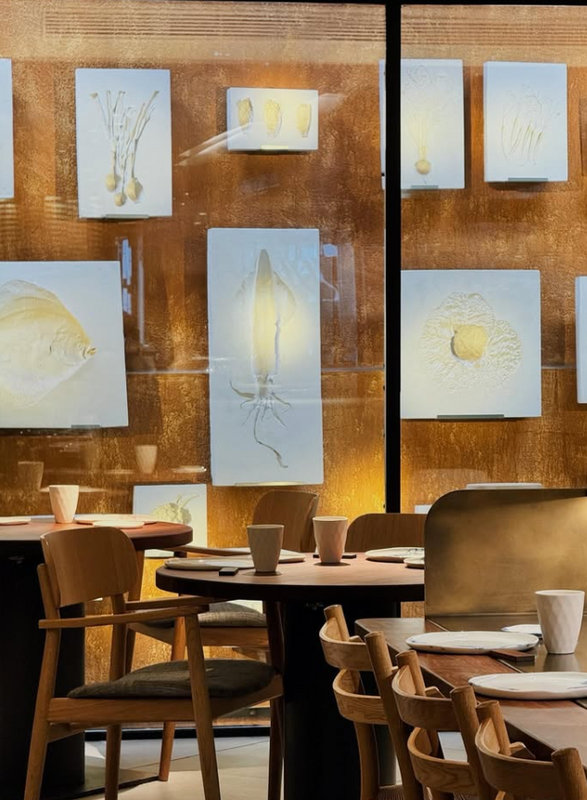
Nandu Jubany’s product-led restaurant in the Eixample, with the kitchen open to the dining room and a Michelin selection to its name. Sommelier Andrea Moras runs a by-the-glass list of more than 30 wines, kept open with Coravin, that has stretched to Flor de Pingus and Château d’Yquem.
View on the Coravin GuidePalma
2 venues pouring Vega Sicilia by the glass

09. La Bodeguilla
Old Town · Palma
A Palma old-town dining room on Carrer de Sant Jaume where the cooking is simple, seasonal and Spanish, and the wine is the other half of the point. The cellar holds more than 400 references from across Spain and beyond, with Ribera del Duero and Rioja well represented by the glass.
View on the Coravin Guide
10. BàrBar
Old Town · Palma
A few streets away on Carrer de la Concepció, BàrBar pairs a well-stocked cellar with a kitchen that sets tradition against newer ideas. Bordeaux, Champagne and Burgundian grapes sit beside Rioja and Ribera del Duero on the by-the-glass list.
View on the Coravin GuideBilbao
1 venue pouring Vega Sicilia by the glass

11. Restaurante Victor Montes
Casco Viejo · Bilbao
On Plaza Nueva in the Casco Viejo, Victor Montes began in 1849 as Bilbao’s first gourmet shop and has outlasted almost every other bistro in the city. Basque cooking meets a list built on Ribera del Duero, Rioja and Txakoli, in a room that has witnessed a fair share of the town’s history.
View on the Coravin GuideSeville
1 venue pouring Vega Sicilia by the glass

12. Sobretablas
Nervión · Seville
Camila Ferraro and Robert Tetas have run Sobretablas since 2018, a contemporary restaurant with cooking rooted in the Andalusian countryside and service that is warm rather than formal. The list is one of the broadest in Seville, from sherry and Rioja to Barolo, Jura and Burgundy by the glass.
View on the Coravin GuideMarbella
8 venues pouring Vega Sicilia by the glass

13. Coya Club
Puente Romano · Marbella
Coya’s late-night lounge at Puente Romano, an intimate indoor room where Peruvian hospitality meets live music and DJs. Around 25 wines are poured by the glass, among them Champagne, Provence rosé and Argentine reds, and the sommelier’s selection has included Pintia from magnum.
View on the Coravin Guide
14. Chiringuito
Puente Romano · Marbella
Named Spain’s best beach club by Condé Nast Traveler, Chiringuito is Balinese beds, espeto sardines and long lunches facing the Mediterranean. Champagne and rosé dominate the by-the-glass list, and the evenings end in dancing under the stars.
View on the Coravin Guide
15. Cipriani
Puente Romano · Marbella
A slice of Venice at Puente Romano, with nautical colours, Murano lamps and terrazzo floors, and a garden terrace made for long lunches. The Harry’s Bar classics are all here, from the carpaccio to the Bellini Giuseppe Cipriani created in 1948, with Spanish reds and Syrah by the glass.
View on the Coravin Guide
16. Coya
Puente Romano · Marbella
Peruvian cooking with Japanese, Chinese and Spanish technique, in a room with a retractable roof and Peruvian art that moves from ceviche at lunch to DJs at night. Champagne, Provence rosé and sweet wines headline the by-the-glass list.
View on the Coravin Guide
17. Gaia
Puente Romano · Marbella
Chef Izu Ani’s Greek-inspired restaurant at the heart of the resort, with a terrace folded into the gardens and an Ice Market displaying the day’s catch. Greek and Burgundian whites join Champagne on a by-the-glass list that suits the Mediterranean menu.
View on the Coravin Guide
18. Nobu Marbella
Puente Romano · Marbella
The first Nobu to open in Spain, overlooking La Plaza at Puente Romano and serving Nobu Matsuhisa’s Japanese cooking with its Peruvian accent. The by-the-glass list is short and precise, Champagne and Spanish wines beside a considered sake selection.
View on the Coravin Guide
19. Sea Grill
Puente Romano · Marbella
The gastronomic heart of Puente Romano, an intimate, refined room given over to the sea and the Andalusian countryside. The day’s catch is laid out on ice along a marble bar and cooked to order by chef Leonardo Ferchero, with Burgundy and Ribera del Duero by the glass.
View on the Coravin Guide
20. La Petite Maison
Puente Romano · Marbella
The Niçoise original transplanted to Marbella, with Nicole Rubi’s Riviera classics, sea views and a DJ at sunset. Sea bass à la Nicole and truffle rigatoni meet a list where Bordeaux and Champagne lead the glass pours.
View on the Coravin GuideVega Sicilia, Answered
Where is Vega Sicilia from?
Ribera del Duero, in Castilla y León. The estate lies beside the River Duero near Valbuena de Duero, in the province of Valladolid, within the Alfoz de Peñafiel. The vineyards sit at roughly 750 metres and above, which gives the wines their freshness.
What is the difference between Único and Valbuena 5º?
Both come from the same estate vineyard. Único is the top selection, made only in years the estate considers good enough, aged around five and a half years in oak and released at least ten years after the harvest. Valbuena 5º is released after five years, carries all of the estate’s Merlot alongside Tinto Fino and Cabernet Sauvignon, and is the wine most people meet first. Único Reserva Especial is a third option: a blend of three Único vintages rather than a single year.
What grapes are in Vega Sicilia?
Mostly Tinto Fino, the local name for Tempranillo, with Cabernet Sauvignon and Merlot descended from the Bordeaux cuttings the founder planted in the 1860s. The 2016 Único is 96 per cent Tinto Fino and four per cent Cabernet Sauvignon; Valbuena 5º carries the estate’s Merlot.
Can the Vega Sicilia winery be visited?
Not in the way most Ribera wineries can. Vega Sicilia does not run a public tour programme; its nineteenth-century mansion hosts invited guests and trade visitors. For many the by-the-glass pours at the 20 venues above are the most practical way to taste the range.
Why is Único aged for ten years before release?
Because the estate believes the wine needs it. Young Único is dense and structured; five and a half years in oak, beginning in small barrels and finishing in large casks, followed by years in bottle, softens the tannin and lets the wine arrive on the market ready to drink rather than ready to cellar. Gonzalo Iturriaga calls it a unique way of making wine, and in poor years the estate simply does not make it.
How should Vega Sicilia be served?
Like a mature Bordeaux: around 16 to 18°C, in a large glass, with time. Único in particular rewards an hour in the glass. By-the-glass service makes this easier rather than harder, since a measure poured from a preserved bottle has not been sitting open since lunch.